
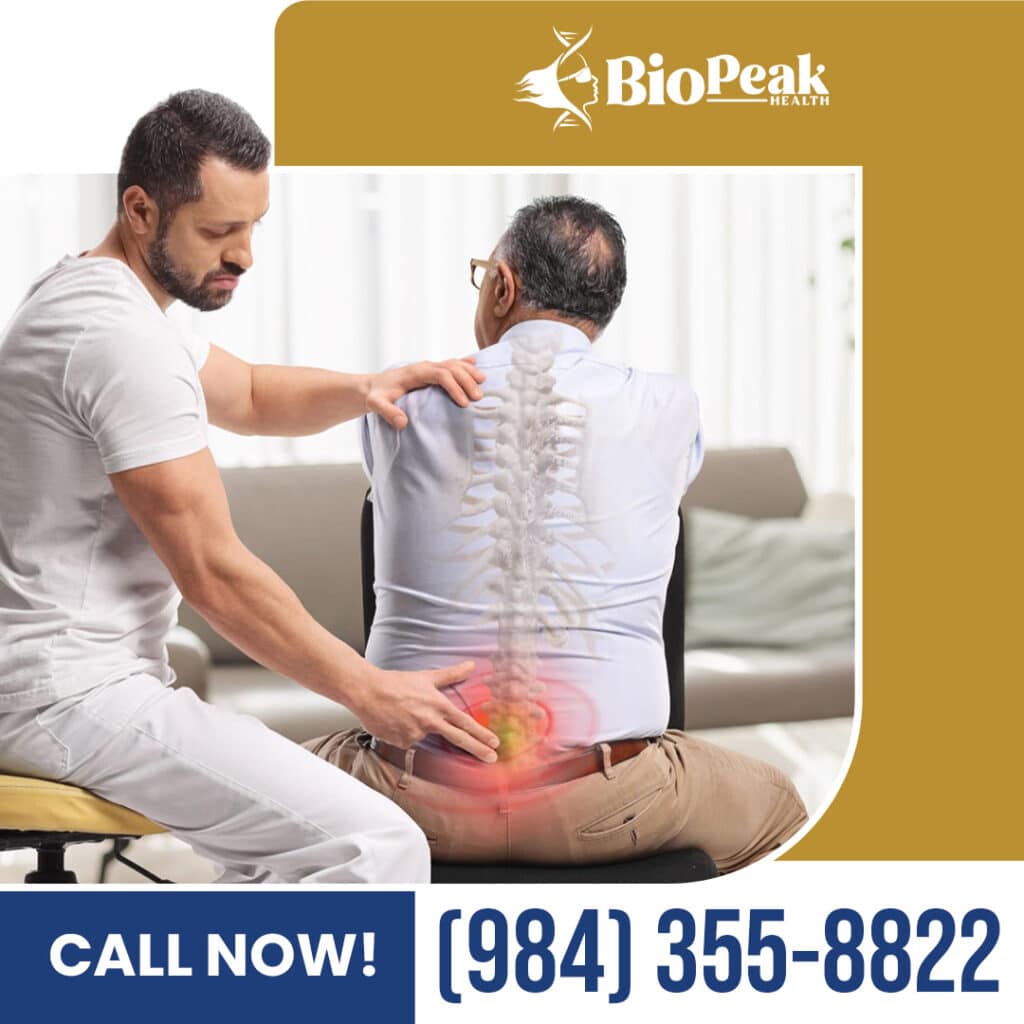
Chronic back pain, herniated discs, and sciatica drive many patients toward surgery each year. While certain conditions do require surgical intervention, the majority of spinal problems respond well to conservative treatment. Spinal surgery carries significant risks, extended recovery periods, and uncertain outcomes that many patients can avoid. Many disc problems and nerve compression issues respond well to chiropractic treatment without requiring surgery. Your choice of initial healthcare provider plays a significant role in determining whether you ultimately need surgical intervention.
At BioPeak Health, we specialize in helping patients explore non-surgical options through Isolation Disc Therapy (IDD Therapy), an advanced form of spinal decompression therapy that targets specific problem discs. As the only certified provider of this specialized treatment in North Carolina, we offer care unavailable at other facilities. Dr. Chris Werness, our clinical director, brings 30 years of experience treating complex spinal cases. We provide honest assessments to determine whether conservative care can address your condition or if surgical referral becomes necessary.
Why Many Spinal Surgeries Fail to Provide Relief
Spinal surgery fails to provide relief for many patients, even when performed by skilled surgeons using modern techniques. Failed Back Surgery Syndrome (FBSS) is the term used to describe persistent or worsening pain following spinal procedures. This condition affects a substantial percentage of surgical patients and creates challenges more severe than the original injury.
Common Reasons Surgery Fails
- Incorrect diagnosis represents one of the leading causes of surgical failure. When the true source of pain is misidentified, surgery addresses the wrong problem. A surgeon may operate on a disc that appears abnormal on imaging but is not actually causing the patient’s symptoms.
- Incomplete decompression occurs when surgery fails to fully relieve nerve pressure. Residual disc material, bone spurs, or thickened ligaments may continue compressing nerves even after the procedure.
- Scar tissue formation develops naturally during healing, but it can create new nerve compression. This fibrotic tissue, called epidural fibrosis, binds to nerve roots and causes pain that mimics or exceeds the original symptoms.
- Adjacent segment degeneration happens when fusion surgery places increased stress on discs above and below the fused levels. These segments break down faster than normal, often requiring additional surgery within five to ten years.
- Hardware complications include screws loosening, rods breaking, or plates shifting position. These mechanical failures cause pain and may require revision surgery to correct.
- Persistent inflammation around surgical sites can irritate nerves long after tissues heal. The body’s inflammatory response sometimes continues indefinitely, creating chronic pain.
- Nerve damage during surgery can occur despite careful technique. Once nerves are injured during the procedure, recovery becomes difficult or impossible.
These outcomes reveal why exploring conservative options before surgery makes medical and financial sense. Consulting a chiropractor near you offers an opportunity to assess conservative treatment options before proceeding to surgery.
Research Supporting Conservative Spinal Care
Multiple peer-reviewed studies demonstrate how manual therapy and spinal decompression therapy prevent surgical interventions. The evidence spans decades and includes large population studies, clinical trials, and long-term outcome research.
A landmark study published in the Journal of Manipulative and Physiological Therapeutics examined workers with back injuries and found that 42.7% of those who first saw a surgeon had surgery within three years, compared to only 1.5% of those whose first provider was a chiropractor. This research, conducted by Keeney and colleagues at Dartmouth, demonstrates how the initial healthcare provider dramatically influences surgical rates.
Research published in JAMA Network Open involving 750 active-duty military members showed that chiropractic care combined with usual medical care for low back pain provided greater pain relief and greater reduction in disability than medical care alone. The military population provided an ideal study group due to uniform fitness levels and standardized access to medical resources.
Population research indicates that patients with access to chiropractic care reduce back surgery rates and hospitalizations while lowering overall treatment expenses. Insurance companies that restrict chiropractic access inadvertently increase their expenditures on surgical care and extended disability claims.
These findings demonstrate that seeking a chiropractor near you as your first point of contact for spinal problems significantly reduces the likelihood of requiring surgical intervention.
What Chiropractic Care Offers for Spinal Conditions
Chiropractic care focuses on diagnosing and treating musculoskeletal disorders, particularly those affecting the spine. A chiropractor uses various manual and mechanical techniques to restore proper spinal alignment, improve mobility, and reduce nerve irritation without surgery or medication.
Common Chiropractic Methods
- Spinal adjustments involve applying controlled force to specific vertebrae that have become restricted in movement. These manual manipulations restore joint mobility, reduce muscle tension, and decrease pressure on surrounding nerves. Adjustments produce the characteristic popping sound as gas bubbles release from the joint fluid.
- Flexion-distraction technique uses a specialized table that gently stretches and decompresses the spine through rhythmic motions. This method is particularly effective for disc herniations and spinal stenosis, as it creates space between vertebrae without forceful manipulation.
- Instrument-assisted adjustments utilize handheld devices that deliver precise, low-force impulses to the spine. These tools allow treatment of sensitive areas or patients who prefer gentler approaches than manual manipulation.
- Soft tissue therapy addresses muscle restrictions, trigger points, and fascial tension that contribute to spinal dysfunction. Techniques include myofascial release, trigger point therapy, and therapeutic massage to reduce muscle guarding and improve circulation.
- Rehabilitative exercises strengthen supporting muscles, correct postural imbalances, and retrain movement patterns. These exercises prevent recurrence of spinal problems by addressing underlying mechanical weaknesses.
At BioPeak Health, we combine these traditional chiropractic methods with advanced spinal decompression therapy to provide the most effective non-surgical treatment for disc conditions.
How Isolation Disc Therapy Works
Isolation Disc Therapy (IDD) represents an advanced form of spinal decompression therapy that creates negative pressure within intervertebral discs through controlled distraction forces. Unlike general spinal decompression, IDD therapy targets specific problem discs with precision.
The therapy differs fundamentally from traditional traction. Older methods applied a constant pulling force, which triggered protective muscle spasms. IDD therapy alternates between distraction and relaxation phases in precisely timed cycles, preventing muscle guarding and allowing true decompression.
The Treatment Process at BioPeak Health
BioPeak Health remains the only certified provider of this specialized technique in North Carolina. During treatment, the patient lies face down while a specialized flexion-distraction table gently flexes at the hip level. Our chiropractor places his hand above the affected disc, manually guiding it away from the spinal cord as the table moves through repetitive cycles. This process occurs hundreds of times per treatment session.
This creates intradiscal pressure changes that encourage retraction of bulging tissue. Nutrient-rich fluids enter the disc space, supporting cellular repair. Inflammation decreases as the mechanical irritation of nerve roots reduces.
After completing the prone phase, patients turn supine for cervical decompression. The legs are elevated while a soft collar supports the neck. Gentle distraction separates cervical vertebrae, releasing tension throughout the upper spine.
Postural Rehabilitation Component
At BioPeak Health, we provide every IDD therapy patient with postural analysis and corrective protocols. Poor posture contributes considerably to disc problems and prevents complete recovery if left unaddressed.
Our rehabilitation program includes stabilization exercises for the shoulders, hips, knees, and ankles that restore proper joint mechanics. We evaluate workstation ergonomics to identify occupational stress factors contributing to your condition. Through trigger point therapy, we release muscle restrictions that pull the spine out of alignment.
These interventions address the mechanical problems that originally caused your disc injury. Without correcting these underlying factors, symptoms often return after completing manual therapy. Our goal is not just to relieve your current pain but to prevent future recurrence through proper postural correction and movement retraining.
Conditions That Respond to IDD Therapy
Conservative spinal care effectively addresses many pathologies that prompt surgical recommendations.
Herniated and Bulging Discs
A herniated disc happens when the soft inner gel of a spinal disc pushes through a tear in the tough outer layer. This bulging material presses against nearby nerves, causing pain that radiates down your arms or legs, depending on where the herniation occurs.
Herniations in the lower back typically cause leg pain, numbness, and weakness. Herniations in the neck produce similar symptoms in the arms and hands.
The vacuum effect created during treatment draws the bulging disc material back toward the center, where it belongs. Repeated treatments over several weeks allow the herniation to gradually retract.
Sciatica from Nerve Compression
Sciatica describes radiating pain that travels from the lower back through the buttocks and down the leg, following the path of the sciatic nerve. This condition develops when a damaged disc in the lower back presses against the nerve roots.
Patients often describe burning, shooting, or electric sensations that extend all the way to the foot. Numbness and weakness may accompany the pain, especially with severe compression. IDD therapy targets the specific disc levels where these nerve roots exit the spine, relieving pressure and eliminating the radiating symptoms.
Degenerative Disc Disease
Degenerative disc disease involves the gradual breakdown of spinal discs through normal aging and years of mechanical wear and tear. As discs lose water content over time, they become thinner and less effective at cushioning the vertebrae.
While we cannot completely reverse degeneration, treatment promotes fluid exchange within the discs. This rehydration effect helps restore some disc height and improves shock-absorption capacity. The treatment also strengthens the muscles and ligaments that support your spine through targeted rehabilitation exercises.
When Surgery Becomes Necessary
While conservative care helps most patients avoid surgery, certain conditions require immediate surgical intervention.
Medical Emergencies Requiring Surgery
- Cauda equina syndrome represents a medical emergency requiring immediate surgery. This condition occurs when severe compression affects the bundle of nerve roots at the base of the spinal cord. Symptoms include sudden loss of bowel or bladder control, numbness in the saddle region, and progressive leg weakness in both legs.
- Progressive neurological deficits indicate ongoing nerve damage. When a patient loses significant function over days or weeks despite conservative treatment, surgery may become necessary to prevent permanent deficits. Examples include foot drop, hand weakness preventing grip, or rapidly progressing numbness.
- Spinal tumors or infections require surgical intervention in most cases. Tumors compressing the spinal cord or nerve roots need surgical removal. Similarly, spinal infections that do not respond to antibiotics may need surgical debridement.
- Severe spinal instability from fractures, severe spondylolisthesis (vertebral slippage), or other structural problems may require surgical stabilization when the spine cannot maintain proper alignment through conservative measures.
At BioPeak Health, we perform thorough evaluations to identify these conditions. When surgery represents the appropriate treatment, we provide honest recommendations and referrals to qualified surgeons.
SuperHuman Protocol for Accelerated Healing
BioPeak Health provides the SuperHuman Protocol, a three-component therapy system that enhances cellular energy production and tissue repair. We remain the only certified provider in North Carolina. The protocol combines Pulsed Electromagnetic Field therapy (PEMF), Exercise with Oxygen Therapy (EWOT), and red light therapy in a specific sequence.
PEMF uses low-frequency electromagnetic pulses to improve ion exchange across cell membranes, preparing tissues for enhanced oxygen uptake and nutrient delivery. EWOT combines low-to-moderate physical activity with concentrated oxygen inhalation, supporting mitochondrial function and cellular energy production. Red light therapy delivers specific wavelengths that stimulate mitochondrial cytochrome c oxidase, enhancing ATP production.
We use the most powerful full-body red light chamber available, delivering consistent dosing across the entire body simultaneously.
Complete protocol sessions take approximately one hour. When paired with IDD therapy, recovery accelerates substantially. Many patients notice improvements within the first week of combined treatment.
Treatment Timeline and What to Expect
Understanding the progression of conservative care helps patients commit to the process and recognize signs of improvement.
Initial Consultation
The first visit to our clinic includes a detailed history review, physical examination, and analysis of any existing imaging studies. Dr. Werness evaluates spinal alignment, neurological function, range of motion, and postural mechanics. This assessment determines candidacy for non-surgical care and screens for conditions that require surgical intervention rather than conservative treatment.
Treatment Schedule
Treatment frequency is customized based on your individual condition and response to care. Most patients begin with more frequent sessions in the initial phase, which then gradually reduce as pain decreases and function improves.
Total treatment duration typically spans six to eight weeks for disc conditions. Each complete appointment takes approximately one hour, which includes IDD therapy on the decompression table along with any additional therapies needed for your specific condition.
Measuring Progress
Multiple metrics track improvement. Pain intensity measured on a scale typically shows an early reduction. Functional measures include walking tolerance, sitting duration, and the ability to perform specific movements. Range of motion testing quantifies mechanical improvements. Forward flexion, extension, and side-bending measurements demonstrate restored spinal mobility.
Neurological symptoms often resolve more slowly than mechanical pain. Numbness and weakness may persist for several weeks after pain subsides. Complete nerve healing requires sustained decompression and time for tissue recovery.
Understanding the progression of conservative care helps patients commit to the process and recognize signs of improvement. This treatment timeline reflects our approach as a chiropractor in Raleigh specializing in non-surgical disc care.
BioPeak Health: Experience and Expertise That Matter
Dr. Chris Werness brings 30 years of focused practice treating complex spinal cases, including serving as team chiropractor for professional and collegiate sports teams. His training includes certification in multiple advanced techniques, combining sports medicine expertise with advanced disc treatment protocols.
BioPeak Health remains the only certified provider of Isolation Disc Therapy in the state. This designation reflects mastery of manual decompression methods that complement our table-based IDD Therapy.
Our facility houses specialized equipment designed specifically for non-surgical disc treatment and accelerated healing. We continuously invest in proven technologies that improve patient outcomes and recovery times. Equally important is our collaborative approach to care. We work closely with each patient, adjusting treatment based on their progress and ensuring they understand each step of their recovery. This partnership approach produces better long-term results than passive treatment alone.
Honest Assessment and Referrals
As a trusted chiropractor in Raleigh, we provide honest evaluations of every patient’s condition. When conservative care represents the appropriate treatment, we develop personalized protocols. When surgery becomes medically necessary, we provide referrals to qualified surgeons. This commitment to proper diagnosis and appropriate treatment recommendations builds trust with our patients.
Connect with Raleigh’s Disc Specialists
If you face recommendations for back surgery or suffer from herniated discs, sciatica, or chronic spinal pain, schedule a consultation to explore non-surgical options. At BioPeak Health, we will review your medical history, examine your spine, analyze any imaging studies, and explain whether conservative treatment can address your specific condition.
Call or text (984) 355-8822 to schedule your evaluation. Email inquiries to [email protected]. Visit our website for additional information.
Most spinal conditions respond well to chiropractic care when proper techniques are applied. Your choice of a chiropractor near you can determine whether you need surgery or can recover through conservative care. Find out if you qualify for non-surgical treatment before making any surgical decision.