
Yes. A disc injury, such as a herniation, can cause pain, numbness, or tingling in the leg when it presses on a nearby spinal nerve root, a condition known as sciatica. The compressed nerve carries sensory signals into the leg and foot, so irritation at the spine can be felt far from the injury itself. Anyone with leg symptoms like these should look into back pain treatment in Raleigh before the nerve irritation has a chance to worsen. At BioPeak Health, we identify which nerve level is involved before building a care plan.
Key Takeaways:
- Lifetime incidence: Sciatica is a common condition that can affect people at some point in life.
- Leading cause: Disc herniation is a major cause of sciatica, though not the only one.
- Common levels: Herniated discs frequently occur at the L4-L5 level and can be associated with symptoms that extend into the leg.
- Gender pattern: Sciatica appears to affect men more frequently than women over the course of a lifetime.
- Red flag: Sudden weakness or loss of bladder or bowel control needs immediate care.
What Is Sciatica?
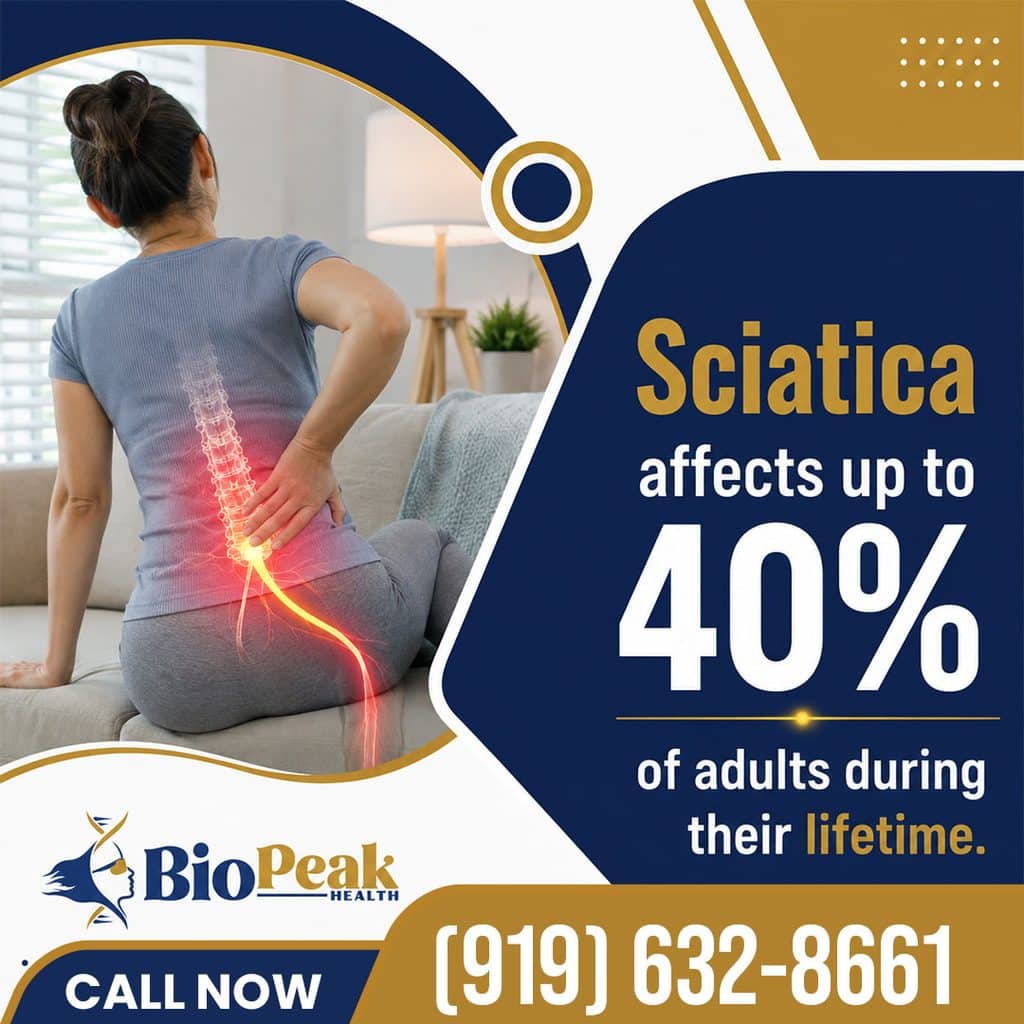
Sciatica is leg pain, numbness, or tingling that follows the sciatic nerve, usually starting in the lower back or buttock and running down one leg. It happens when a nerve root is compressed or irritated, most often by a bulging or herniated disc. Sciatica is estimated to affect 10% to 40% of people during their lifetime, with some estimates reporting a lifetime incidence of 5% in men and 2.5% in women.
What Are the Types of Leg Symptoms from a Disc Injury?
The nerve root affected by a disc injury determines which sensations show up in the leg.
Radiating Pain
Pain from a disc injury often travels from the lower back through the buttock and down the leg, typically described as sharp or burning.
Numbness
Numbness happens when the compressed nerve can’t properly carry sensory signals. Because each nerve root controls sensation in a specific strip of skin called a dermatome, the location of the numbness can help a provider identify which nerve root is affected.
Tingling and Weakness
Tingling, sometimes called pins and needles, often shows up alongside numbness. Weakness can also occur, making it harder to lift the foot or push off while walking. Herniated discs commonly occur at the L4-L5 level, which can contribute to symptoms that extend into the leg.
Which Nerve Root Is Likely Involved?
| Affected Nerve | Where Symptoms Show Up | What Might Feel Weak |
|---|---|---|
| L4 | Front of thigh to inner shin | Lifting the foot upward |
| L5 | Outer leg to top of foot and big toe | Lifting the hip or big toe |
| S1 | Back of leg to outer foot | Pushing off with the foot |
When Should You See a Doctor for Leg Symptoms?
Chronic back pain with leg symptoms lasting more than a few weeks warrants evaluation. Sudden, severe pain, significant leg weakness, or loss of bladder or bowel control are signs of a possible emergency needing immediate attention. At BioPeak Health, we review imaging and perform a physical exam to confirm which disc and nerve level are involved before recommending treatment.
Looking for Back Pain Treatment in Raleigh?
Leg pain, numbness, or tingling doesn’t have to be something you live with. Our team at BioPeak Health can pinpoint which nerve is involved and map out a plan from there. Cal/Textl (984) 355-8822 or email [email protected] to get started. Lumbar back pain or leg nerve symptoms are worth addressing sooner, so you can get back to real back pain relief.

Frequently Asked Questions
Can leg numbness from a disc injury go away without surgery?
Yes. Many cases improve with non-surgical care such as targeted therapy and activity changes. Surgery is typically reserved for cases that don’t improve.
How long does sciatica from a disc injury usually last?
Many cases improve within a few weeks to a couple of months with conservative care. Some people experience longer or recurring symptoms without a clear treatment plan.
Is leg numbness always a sign of a serious problem?
Not always, since mild nerve irritation can cause temporary numbness that resolves on its own. It becomes more concerning when paired with weakness or loss of bladder or bowel control.