
After a spinal decompression session, avoid heavy lifting, twisting, prolonged sitting, and high-impact exercise while your spine settles. At BioPeak Health, patients are given specific aftercare guidance based on the disc being treated, since skipping it can undo some of the progress made during the session.
Key Takeaways:
- Movement: Avoid heavy lifting, aggressive bending, and twisting right after a session.
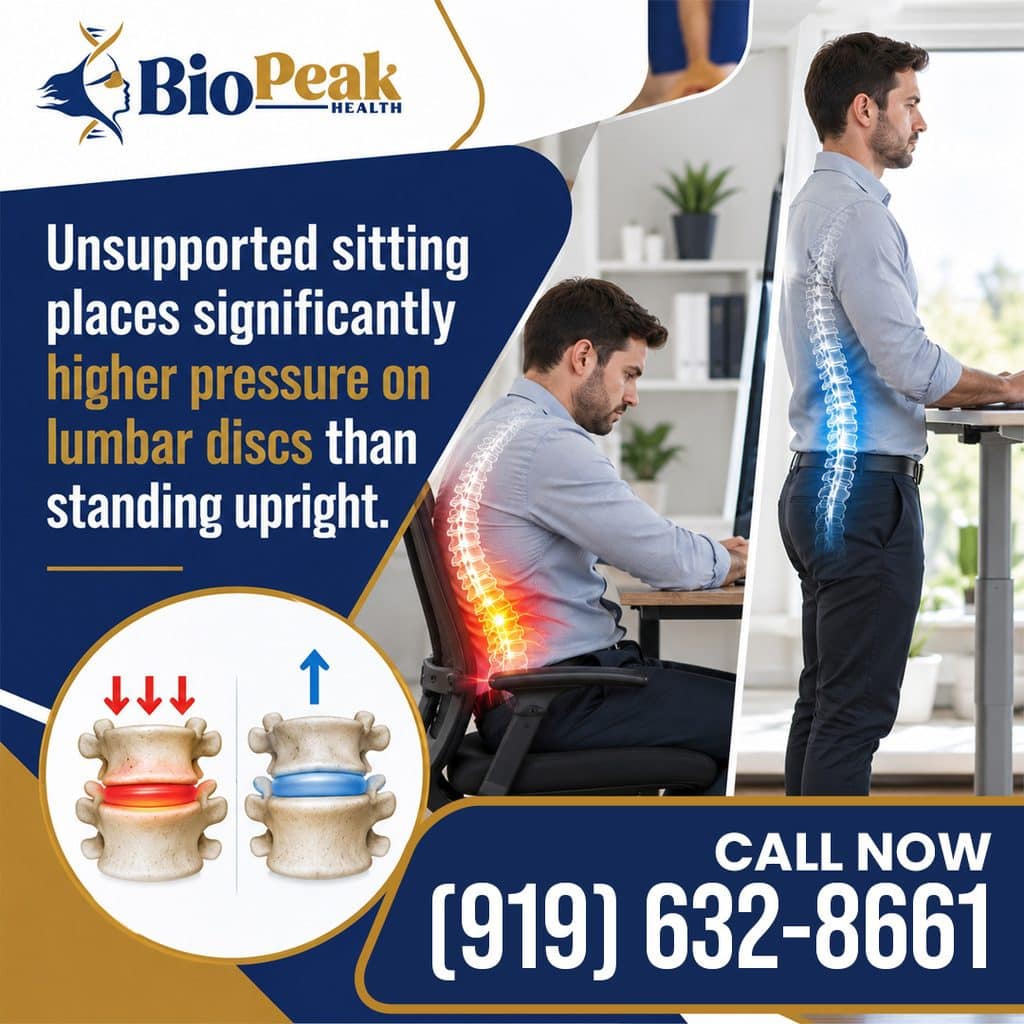
- Sitting: Prolonged, unsupported sitting raises pressure on the lumbar discs compared with standing.
- Sleep: Stomach sleeping can strain the neck and lower back during recovery.
- Red flag: New weakness, numbness, or pain that worsens after a session should be reported to your provider right away.
What Should You Avoid Immediately After a Spinal Decompression Session?
The main goal after any spinal decompression session is to protect the reduced pressure the treatment just created. A few habits tend to work against that:
- Heavy lifting or carrying, even light grocery bags held incorrectly
- Aggressive bending, twisting, or reaching overhead
- High-impact exercise like running or jumping
- Sitting for long stretches without getting up
- Sleeping on your stomach
These habits reload the spine quickly and can offset some of the benefit of the session.
Why Does Posture Matter After Non-Surgical Decompression?
Posture affects how much pressure sits on the lumbar discs, which is part of why non-surgical decompression pairs movement guidance with treatment. A 2022 systematic review and meta-analysis of intradiscal pressure studies found that sitting produces significantly higher pressure on the lumbar spine than standing in people with healthy discs, though this difference was less consistent in more recent studies and in people with degenerated discs.
That is one reason providers commonly recommend short movement breaks, walking, and posture awareness between decompression sessions rather than long, static sitting.
What Helps and What Hurts Recovery After a Spinal Decompression Session?
| Helpful After a Session | Better to Avoid |
| Walking gently for a few minutes | Prolonged, unsupported sitting |
| Drinking water throughout the day | Heavy lifting or carrying |
| Resting on your back or side | Sleeping on your stomach |
| Following your provider’s movement instructions | Twisting, aggressive bending, or high impact exercise |
At BioPeak Health, recovery support after a non-surgical decompression session may include red light therapy, hot and cold therapy, or gentle balancing exercises, layered into the plan based on how the treated disc is responding.
When Should You Call Your Provider After a Session?
Mild soreness or stiffness for a day or two is common after spinal decompression and usually settles on its own. Contact your provider if you notice new numbness, new weakness, sharp pain that is worse than before treatment, or pain that spreads further down an arm or leg. These are not expected reactions and should not be worked through on your own.
Frequently Asked Questions
Can I go back to work right after a spinal decompression session?
Most patients can return to light desk work the same day. Take breaks to stand and walk if your job involves long periods of sitting.
Is it normal to feel sore after spinal disc decompression?
Mild soreness or stiffness for a day or two is common as the spine and surrounding muscles adjust. It should ease on its own rather than get progressively worse.
Can I exercise after a decompression session?
Light walking is generally fine, but high-impact activity like running, jumping, or heavy weightlifting should wait until your provider clears it. Your provider can guide you on when to safely resume specific activities.
Ready for Spinal Decompression Therapy in Raleigh?
Following aftercare guidance is easier when the plan is built around your specific disc issue from the start. At BioPeak Health, spinal decompression therapy in Raleigh is delivered through Isolation Disc Therapy, which focuses on the specific disc causing your symptoms rather than the spine in general. Call/text (984) 355-8822 or email [email protected] to schedule a consultation.